
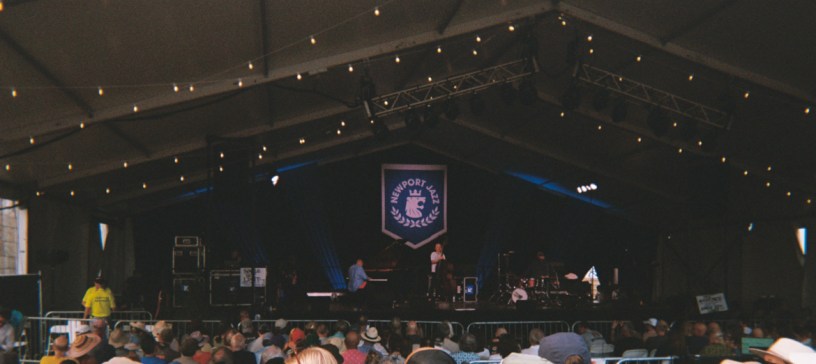
Photo taken by myself of Kenny Barron (Piano), Kiyoshi Kitigawa (Bass), and Johnathan Blake (Drums)
*note: the interview took place at the same time as a performance so the audio clips at the start
Transcript:
Sean Fay: Hello, I am Sean Fay and you’re listening to 89.1 FM, that’s WNYU. Live on WNYU.org all the time. And I am here with Kenny Barron, spectacular pianist. How would you like to introduce yourself?
Kenny Barron: How would I like to introduce myself? Well, I’m Kenny Barron. That’s it.
S. F.: And who will you be performing alongside today?
K.B.: Today with my longtime bassist who’s from Japan. His name is Kiyoshi Kitigawa, and drummer, who just played actually with Bill Frazell, but who’s also my drummer, Johnathan Blake.
S.F.: Awesome, and how to you prepare and get in, like, the right mindset before you go and perform?
K.B.: I don’t do anything special, you know? Yeah, I don’t. I don’t anything special. It’s just you- I mean I’ve been doing this so long, I’ve been playing for 50, 60 years. So I know some people have a group hug and people pray and. No, it’s just about the music. So sometimes to find a quiet place and just chill for a minute, and that’s all that’s necessary.
S.F.: And I’m assuming you’ve been to the Newport Jazz Festival before, but is this a noteworthy location for you to perform at?
K.B.: Oh year. First time was in 1964. Yeah, with Dizzy Gillespie. First time I played here. It hasn’t changed that much.
S.F.: And what cities have influenced your sound or what cities do you feel most at home performing?
K.B.: Any city where I’m performing, but, I mean, I have favorite cities that I like. You know, I used to love San Francisco, but San Francisco had a bunch of jazz clubs just during this- again, during the sixties, you know. There was a place called Bob City. There was the jazz workshop. It was Basin Street west, you know.
S. F.: Are there any cities you still hope to see and perform in someday?
K. B.: Oh there’s a whole lot. A whole lot. A lot of places I haven’t been, you know, but there are a lot of places I have been, you know, so. Yeah.
S.F.: The next section I like to go into is sort of soundscapes, so the musical environment you like to surround yourself with. How would you describe the soundscape you grew up in.
K. B.: I’m not sure I understand.
S. F.: Sort of like the albums, artists, and any other musical traditions you grew up around or grew up in?
K. B.: Well, I grew up listening to all kinds of music, that’s number one. All kinds of music from jazz to r&b. Hip hop wasn’t around then, so that’s not my favorite genre, but I don’t disrespect it, you know, but there was so much music I was around, you know, great vocalists, great soloists, tenor saxophone, trumpet. So that was basically it, just being around the music. I didn’t do anything special. I listen to the music and I try and play as often as possible. For me, that’s the best thing to play as much as possible and to try and do something you’ve never done before, you know? Yeah. Wherever that takes you.
S. F.: And what would you say is one of your favorite soundscapes that isn’t musical, like a place where you can just enjoy the sounds, but there’s no necessarily music happening.
K. B.: Oh, anywhere near water. Like the ocean or. I can think about one memorable thing. I was in Japan, and the promoter said, “let’s go to this little town.” We were in a very small town, and he took us to this little stream, and it was a guy in a boat, standing up paddle board. Not paddle board, but he was with oar on each side. Yeah, yeah, yeah. But it was one of the most peaceful situations. There was the band, a different group a trio. And there were two other older women. This is during the fifties, not the fifties, sixties and seventies. And he was singing this song standing up, you know, and this stream was so shallow you could put your hands in the water, you know, and it was beautiful. That was so peaceful. Things like that.
S. F.: Yeah, I know exactly what you mean. And what album or artist would you say has influenced you the most in your career?
K. B.: Oh all of them. All of them. You know, I play with a lot of people, a lot of different people, and I’ve gotten something from all of them. From all of them. The things that have had maybe the most impact: Playing with Stan Getz, playing with Freddie Hubbard, you know. So I would say those two things, playing with Ron Carter, all those things that are very strong, I learned something from all of them. Ron Carter, I learned how to play soft and still be intense, you know. Working with Youssef Latif taught me about playing outside your normal parameters, you know, and still make it work, you know things, things like that.
S. F.: I feel like when you have played with so many legends, it’s tough to choose just a few. And up next, I just have some more offbeat questions. What’s a movie you can always rewatch?
K. B.: I don’t know, I’m not much of a movie goer lately. I haven’t been. But, probably “The Color Purple”. I really enjoyed it.
S. F.: And if you are looking for food from a truck or a cart, say, around any city, what is your go to option?
K. B.: Oh, I love, I love Indian food and Japanese food. But, probably Indian food more.
S. F.: And what is your go to deli order if you go into a bodega or a deli?
K. B.: Well, I’ve been advised by my doctor just recently that I don’t need to do that. I’m 81 now, so there’s a lot of things I can’t do anymore. High blood pressure, I mean, you’ll get there someday.
S. F.: I hope not, but back in the day. What was your guilty pleasure? A guilty treat that is worth some extra calories and the doctor doesn’t have to hear about it.
K. B.: I still love ice cream. Yeah, I still love Haagen Dazs.
S. F.: And what is your favorite physical medium for music?
K. B.: I don’t have a- well, probably CDs. Well, it doesn’t really matter, you know? Doesn’t really matter as long as it’s music. You know, and good speakers.
S. F.: Any advice for young musicians?
K. B.: Yeah, just go listen. I think it’s important for young musicians to go out, listen to music. Not just records, but listen to musicians, talk to musicians, and play as much as possible. And when you can play with somebody who’s better than you, that’s how you learn.
S. F.: And the show I host is called ‘jazz died??’ with question marks. Is jazz dead??
K. B.: No, it’s not dead. .
S.F.: That’s my perspective. But I’ve heard a bunch of different answers to that one.
K. B.: Yeah I know. You know? No, it’s not dead at all. Maybe the jazz that my father listened to. It’s changed. But it’s different not dead.
S. F.: And finally, anything you want to promote.
K. B.: No, just live music.
S. F.: Amen, It’s been great speaking to you and have a great day.
This was recorded live at the 2024 Newport Jazz Festival on Friday, August 2nd. Broadcast on 89.1 FM on Thursday, August 8th for ‘jazz died??’.
K3FAY
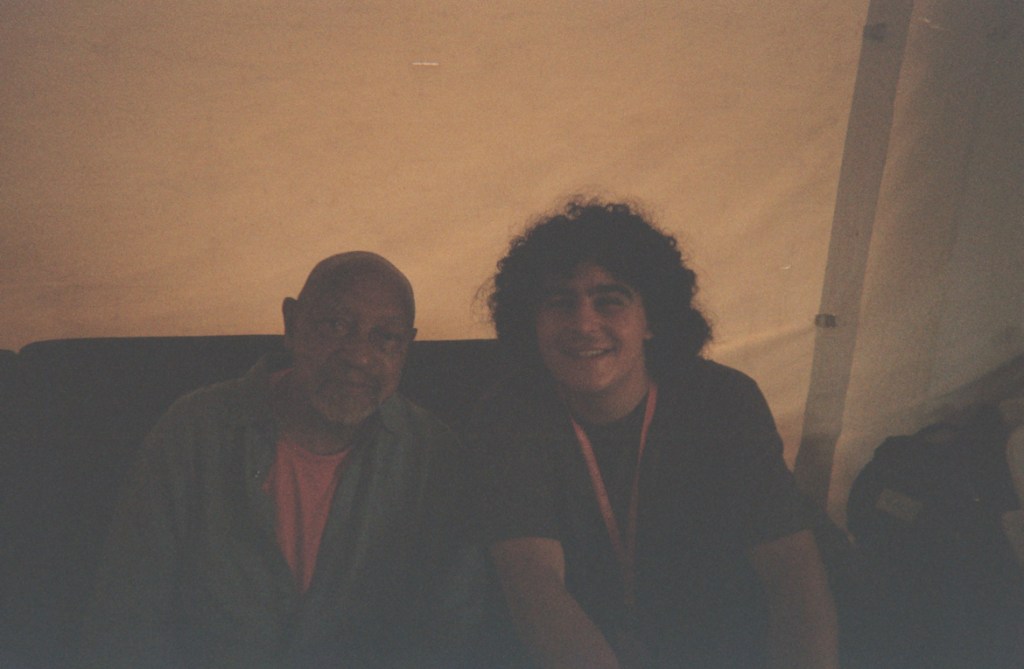
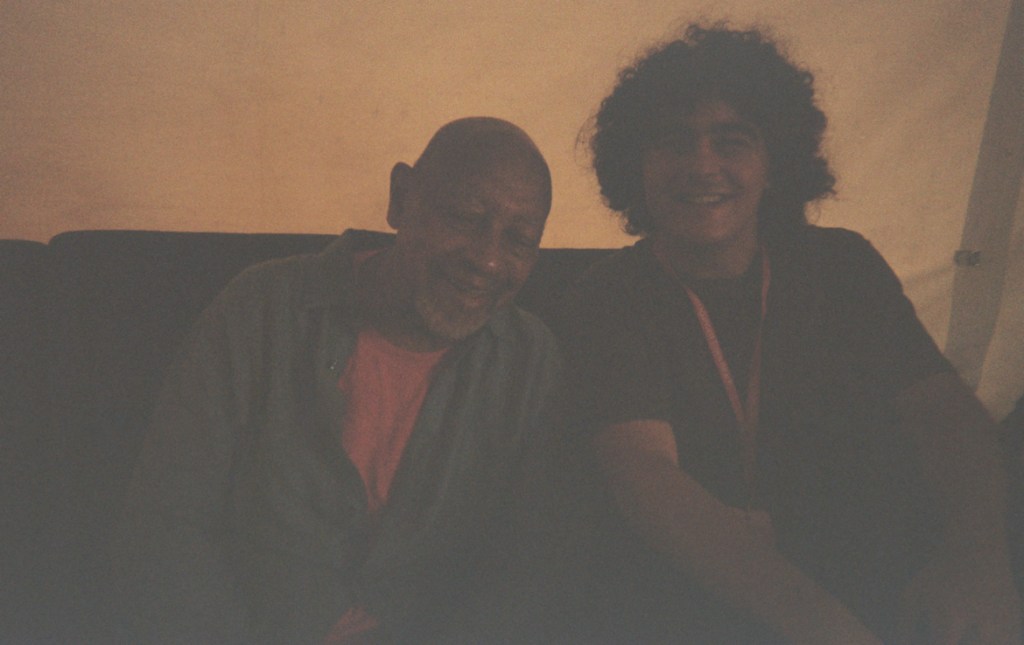
Me and Kenny Barron after the interview.

